XR Lab Internship
Role: Game Designer
Engine/Tools Used: Unreal Engine 5
Period: February 2026 - July 2026
Overview
I started my internship with three learning goals; to improve my Unreal Engine skills, to learn what it means to be proactive in a company setting, and to gain experience speaking with professional clients.
XR Lab provided all of these opportunities, with their company providing VR and AR applications built to train, educate, showcase, and entertain. Here, I’ve learned valuable skills with my learning goals in mind, preparing myself for a place in the game industry.
Learning goals
Learn and become flexible with Unreal Engine 5, to the same extent at which I’ve gotten comfortable with Unity. Improving my ability to prototype and create game mechanics.
Become proactive in a professional work environment, always making sure I have a task to do and keeping myself useful in an environment where I’m not a project lead.
Improve my professional communication skills, particularly by showcasing demos to the clients of XR Lab’s projects.
Personal contributions
Created rapid prototypes of various mechanics using Unreal Engine 5 blueprints.
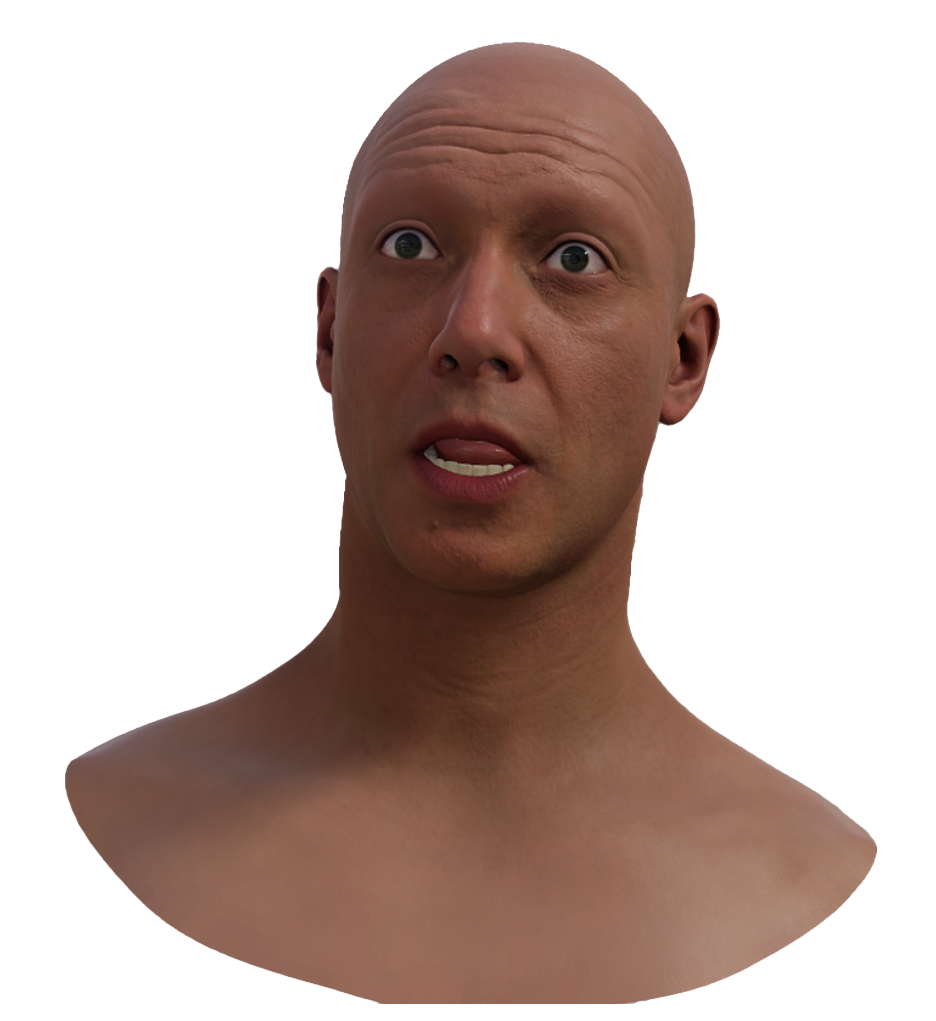
Studied and implemented Metahumans, to ensure a realistic experience.
Contributed to daily stand-ups with the rest of the team.
Took charge in preparing and showcasing demos to XR Lab’s clients and at events.
Wrote detailed game design documents for each of the projects I was involved in.
Tied together game mechanics created by the team of engineers, making games playable.
Process
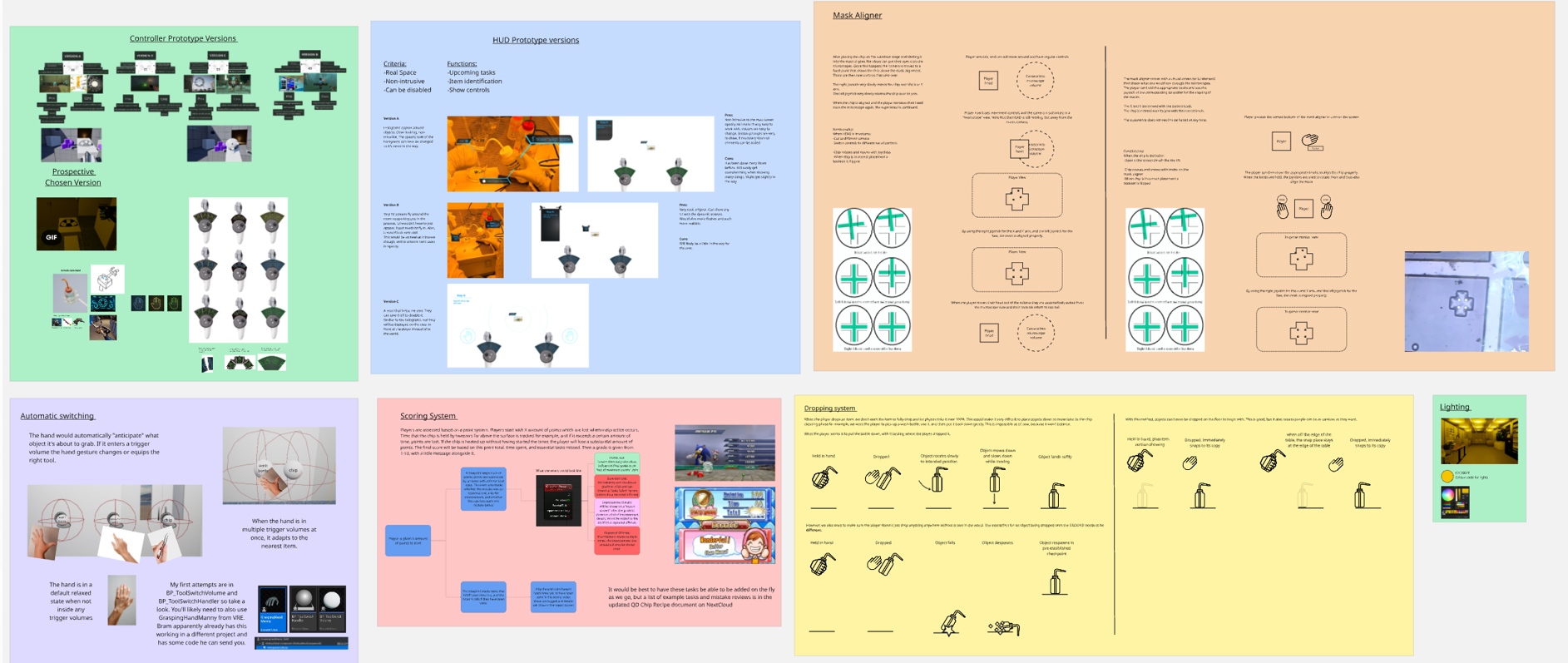
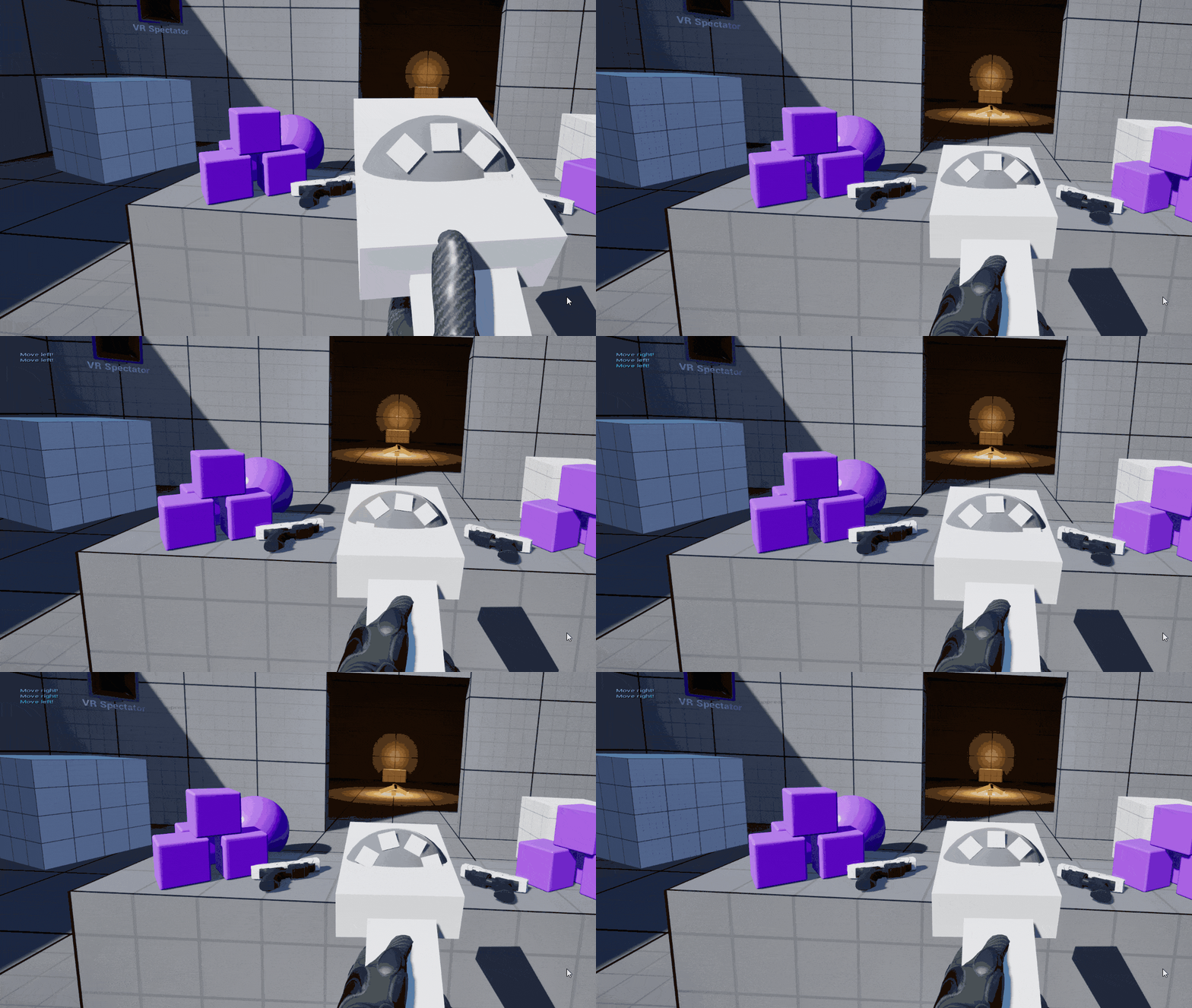
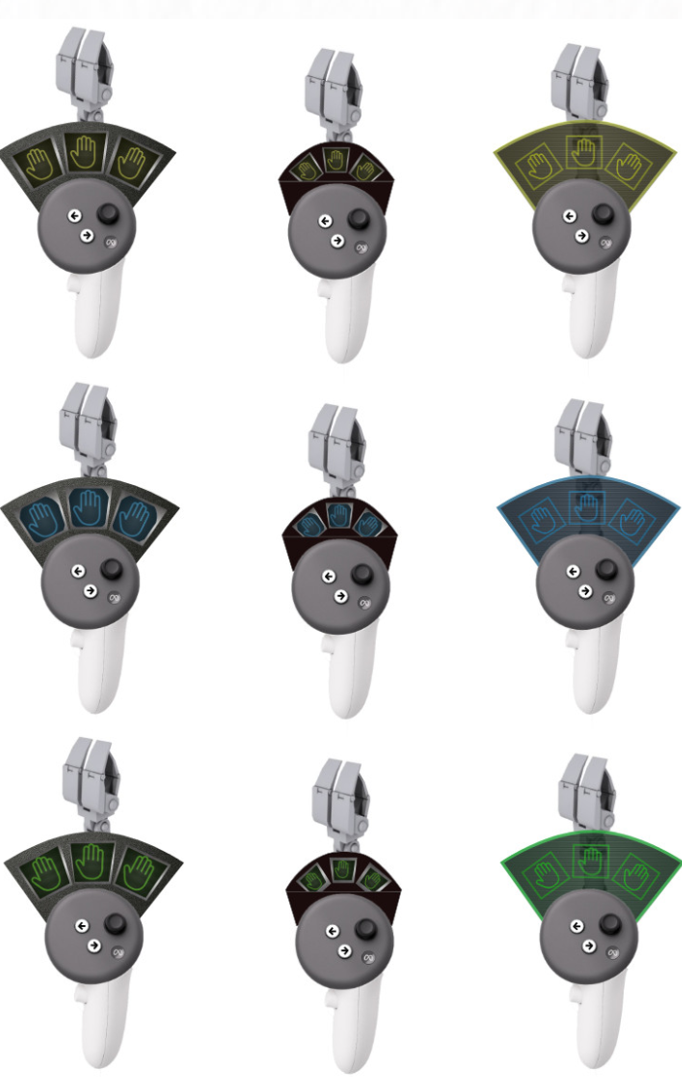
Because the projects I was going to be working on had already started before I joined, I was able to jump right into Unreal Engine and help out. My first task was to prototype different in-game controller types for a VR application to hold bottles, chips, and cups. You would need to switch between tweezers and gloves to pick up different objects.
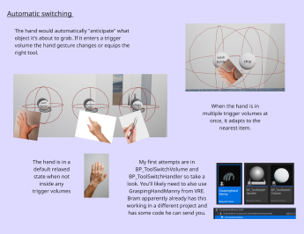
After making multiple iterations of these controllers, each with their own twist, I realized there was always going to be a disconnect between the player and the action of holding something if there’s a button to click beforehand. Automatically switching to the tool that was necessary would likely work better. After prototyping and testing this version, results showed that even players with little experience with VR were able to complete complicated tasks using automatic tool switching.
Aside from Unreal Engine skills, I also contributed by taking on the odd jobs that were forgotten by the team, or didn’t have anyone assigned to them. Proactivity in the company setting was one of my learning goals, and it’s a skill which is very important to me.
I wrote essential documents which were missing in early development, and were since used by each team member throughout the project.
This attitude even got me to take part in the design for their newest project, project Beethoven. While it was very early in the works, I was given the task to write the game design document, and to create early prototypes for different minigames within the game.
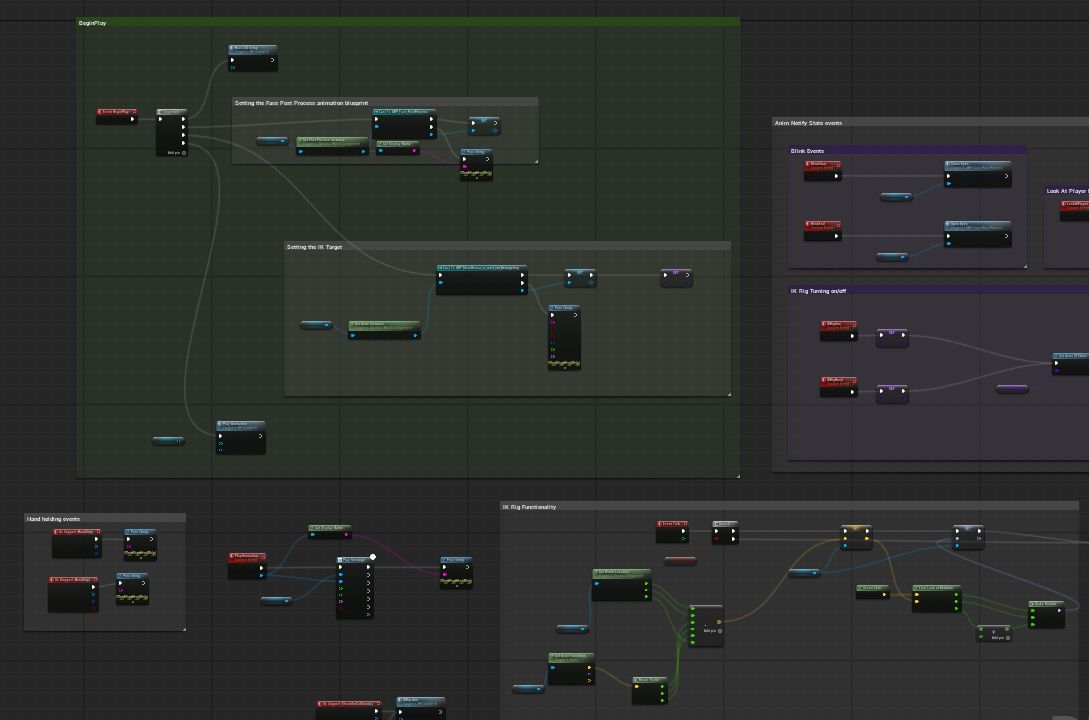
I used one of the other projects to improve more in-depth Unreal Engine skills. Learning about essential tools that make the engine easier to use and learn from. Especially when working with Metahumans and their facial animations, the reference viewer was essential.
Because I was working with code that wasn’t just my own, I was able to learn more about the uses of these features than I would have outside of a company. I was able to look into blueprint interfaces, various uses for arrays, animation blueprints, and more just by learning from code they had already written. Of course I also added to the knowledge pool with notify states and creative uses of timelines.
Learning more about the engine, I became comfortable using it to implement new mechanics which could last for the entire span of the project.
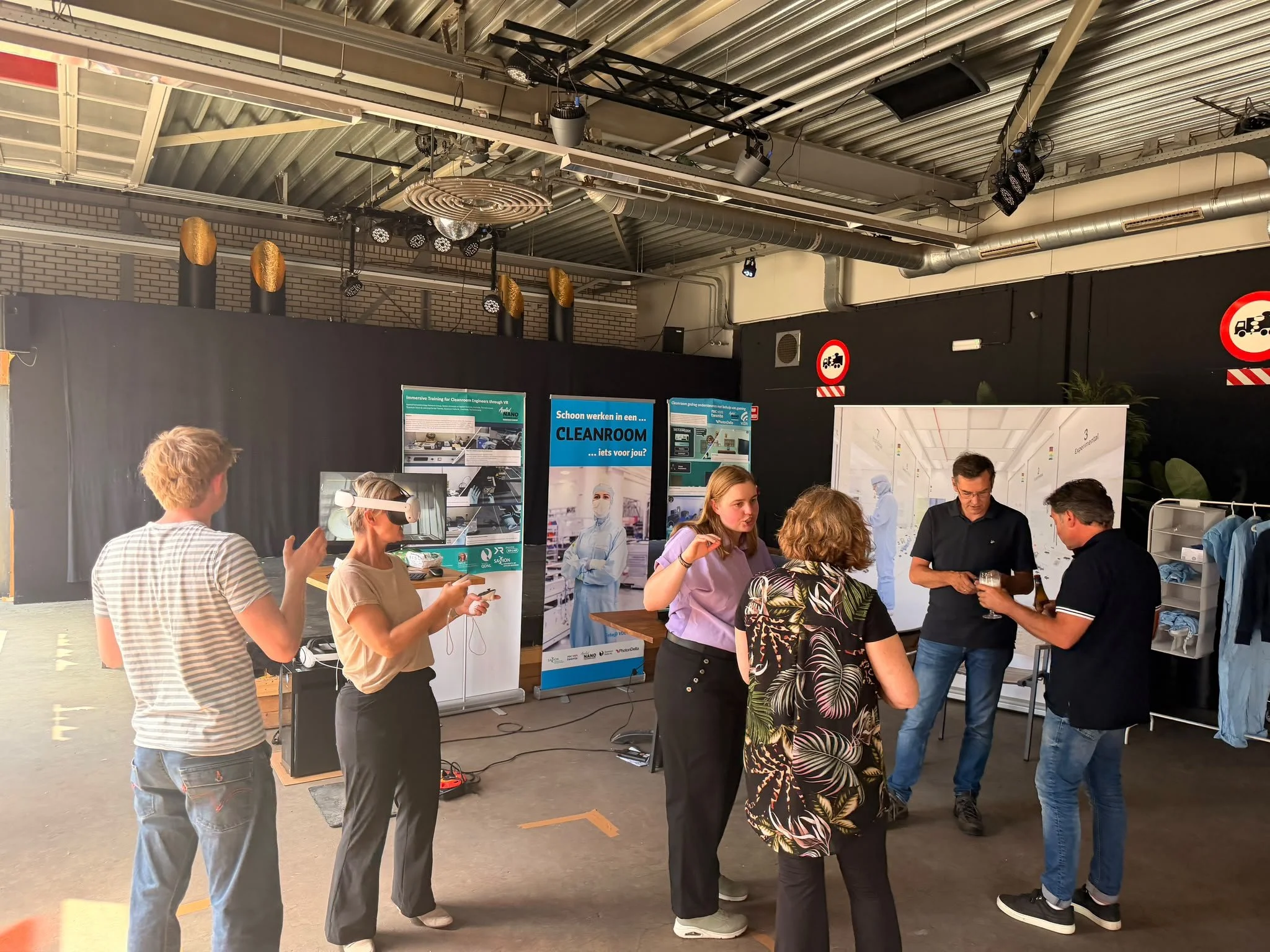
Last of all, I was put in charge of presenting each of the projects for both XR Lab’s clients and for a networking event hosting more than 70 people.
I made sure to develop presentation skills and working on professional communication so I could gain valuable feedback on our projects, which lead to vast improvements on the experiences we were working on.
It was a great experience being left in charge of showing off the projects we were all so proud of. I’ve met great people who will surely be lifelong connections in and outside of the company.
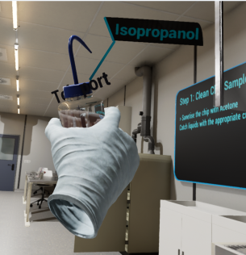
Another mechanic I worked on was the mask aligner. To teach students about how mask aligners work we were tasked to make a true-to-life mask aligner in the VR environment, based on the mask aligner at the University of Twente.
To get started, I quickly wrote a few different approaches, ran it by the team, prototyped the first concept and had it up and running within half a day for testing. By testing with the team and with our client, we ended up changing movement from joy-sticks to motion controls, adding sensitivity adjustors, and adding a handle I originally thought was redundant. The quick pace through iterations and frequent testing allowed the mechanic to be added into the game efficiently and successfully.
Additionally, I added UI to the game, implemented audio, and merged many of the mechanics the engineers programmed into the game into one coherent experience.
Outcome
Having finished my internship, I can confidently say that I chose the right company to intern at. I can tell that the things that I’ve learned will be invaluable to me when finding my place in the industry.
My supervisor stated she felt comfortable giving me important tasks, because she knows I will get them done with quality and in a timely fashion. I believe this is mostly due to showing initiative in taking up tasks, and being proactive in the team. It built my confidence as I moved through the weeks knowing I was contributing greatly to the final products.
I’ve left my internship knowing I have picked up Unreal Engine skills which will prove sufficient in any company to prototype game mechanics.